Kai Washington · 4 October 2026
The Impact of Blockchain Integration on Audit Trails for Long-Term Digital Storage Solutions
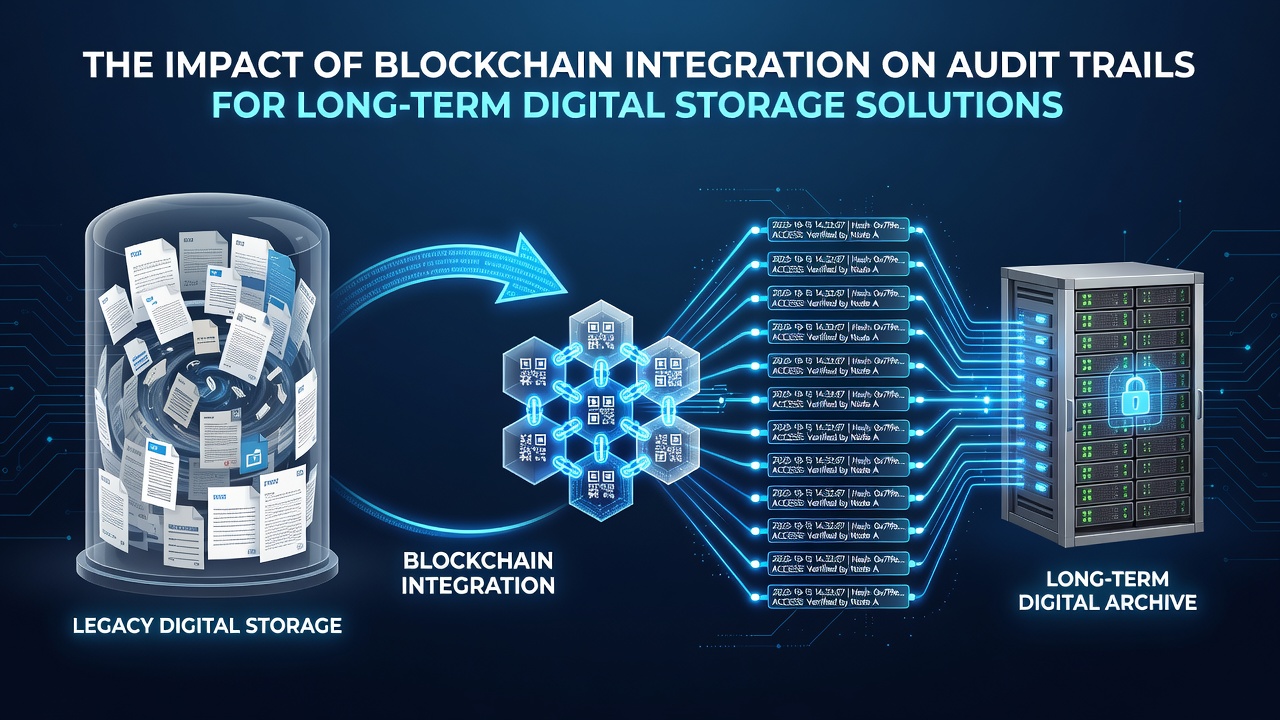
Blockchain technology creates distributed ledger systems that record transactions across multiple nodes in a way that resists tampering once data enters the chain, and this structure has drawn attention from organizations managing long-term digital archives. Researchers have examined how these ledgers can support audit trails by providing chronological records that participants verify through consensus mechanisms rather than relying on centralized authorities.
How Blockchain Supports Immutable Record Keeping
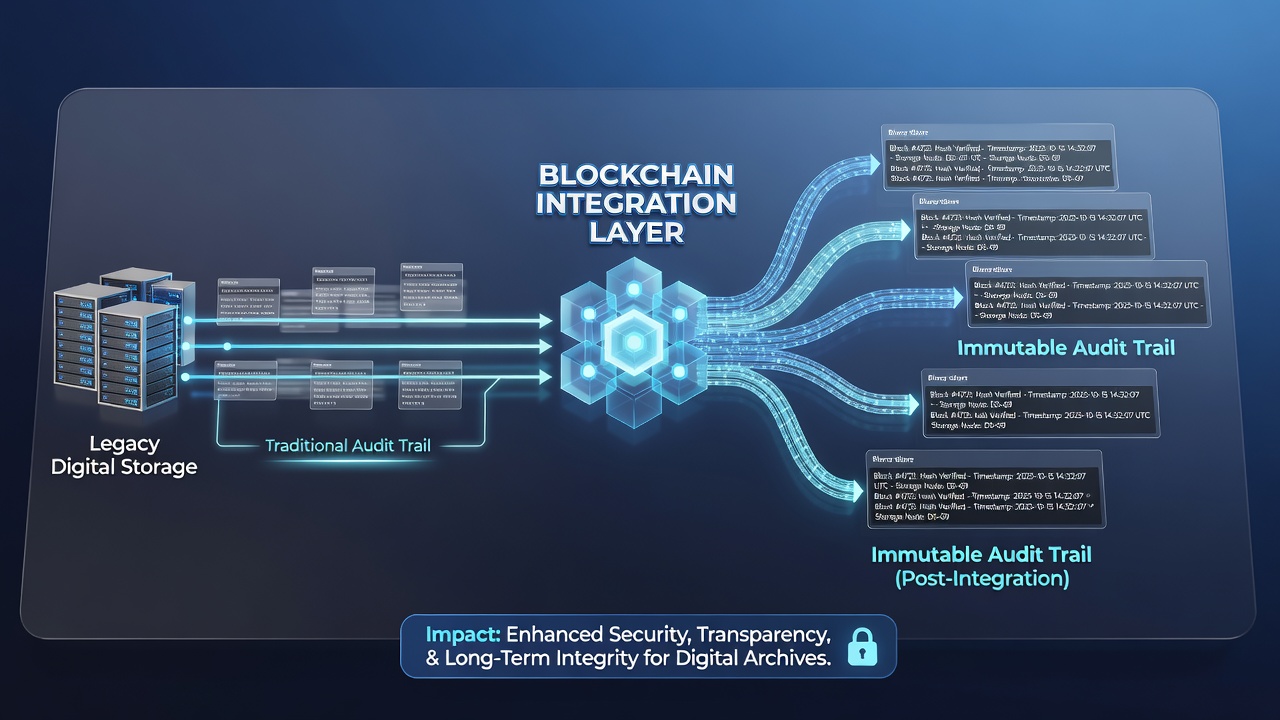
Traditional audit trails often depend on databases that administrators can alter or delete, whereas blockchain entries link through cryptographic hashes that make retroactive changes detectable across the network. Studies from institutions such as the National Institute of Standards and Technology indicate that hash chains combined with timestamping allow verification of when a record was created and who initiated the transaction. Organizations handling vast collections of government documents or scientific datasets have tested these features to maintain integrity over decades.
Nodes in a blockchain network reach agreement on the state of the ledger through protocols like proof of work or proof of stake, and this distributed validation reduces single points of failure that affect conventional storage. Data shows that once a block receives confirmation, reversing it requires control of a majority of the network's computing power, a threshold that grows more difficult as participation increases.
Applications in Long-Term Digital Preservation
Archives that store electronic records for regulatory compliance or historical research face risks from hardware degradation, format obsolescence, and unauthorized access attempts. Blockchain integration addresses some of these issues by embedding metadata and access logs directly into the ledger, creating an independent verification path that survives infrastructure changes. In October 2026, several European memory institutions reported pilot projects that combined blockchain with existing preservation platforms to track file migrations and checksum validations.
One project tracked digital objects from creation through multiple storage migrations, logging each transfer as a transaction that subsequent auditors could query without contacting the original custodian. Such systems allow verification even when original systems become unavailable, since the ledger itself serves as the source of truth.
Technical Considerations and Scalability Factors
Public blockchains process limited transactions per second compared with centralized databases, which creates bottlenecks when archives generate high volumes of metadata updates. Permissioned networks mitigate this constraint by restricting participation to known entities, yet they introduce governance questions about who controls node admission and consensus rules. Reports from the European Commission on digital infrastructure highlight ongoing work to develop hybrid models that combine public verification layers with private data storage.
Energy consumption associated with certain consensus algorithms remains a documented concern, prompting research into more efficient alternatives such as proof of authority or directed acyclic graph structures. Those who have implemented blockchain for archival use often discover that selective recording of critical events rather than every minor access reduces both cost and environmental impact while preserving essential audit information.
Regulatory and Interoperability Developments
Standards bodies continue to evaluate how blockchain records align with existing legal frameworks for electronic evidence. The Australian National Archives has published guidance on using distributed ledgers to demonstrate record authenticity during audits, while Canadian federal agencies have explored similar approaches for long-term retention of administrative documents. Interoperability between different blockchain platforms and legacy archive systems requires standardized data formats and query interfaces that several working groups are currently defining.
Observers note that successful deployments depend on clear policies for key management and node participation, because loss of private keys or departure of major participants can complicate future verification efforts. Research indicates that organizations achieve better outcomes when they combine blockchain audit trails with traditional backup strategies rather than treating the ledger as a complete replacement.
Conclusion
Blockchain integration offers mechanisms for creating tamper-evident audit trails that support long-term digital storage by distributing verification across multiple parties. Data from pilot programs shows measurable improvements in traceability during format migrations and access logging, although scalability and energy considerations influence adoption decisions. Continued development of standards and hybrid architectures will determine how widely these systems appear in institutional archives over the coming years.