Kai Lange · 20 September 2026
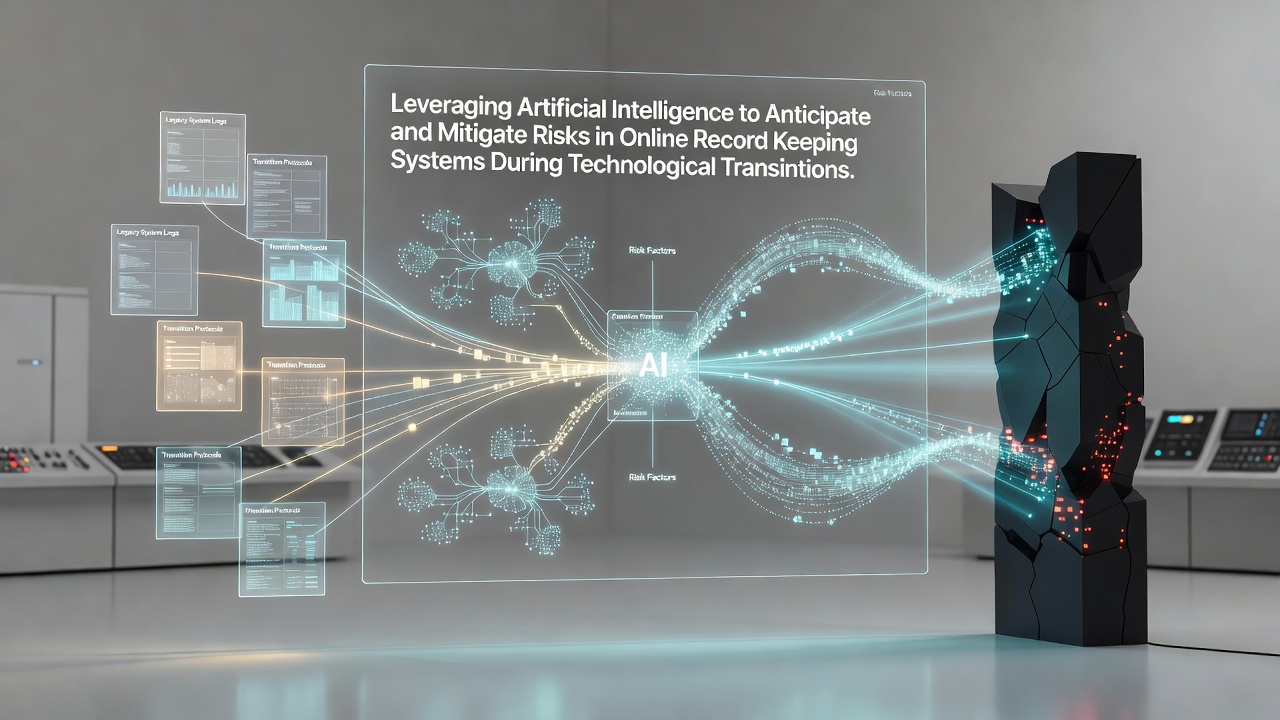
Leveraging Artificial Intelligence to Anticipate and Mitigate Risks in Online Record Keeping Systems During Technological Transitions
Online record keeping systems face multiple vulnerabilities when organizations shift between platforms or update underlying infrastructure, and artificial intelligence tools now play a central role in identifying those vulnerabilities before they escalate into data loss or compliance failures. Researchers at institutions focused on digital preservation have documented how machine learning models analyze patterns in access logs, file integrity checks, and metadata changes to flag potential disruptions during migrations. These systems process large volumes of historical data in real time, which allows administrators to address inconsistencies that might otherwise remain hidden until after a transition completes.
Identifying Core Risks in Record Keeping Transitions
Technological transitions often expose gaps in data validation routines, access control enforcement, and backup synchronization, while older systems may lack the monitoring granularity required to track every file movement or format conversion. Studies from government archives in North America and Europe indicate that migration projects frequently encounter checksum mismatches and permission conflicts that surface only after go-live dates. Artificial intelligence models trained on past migration datasets learn to recognize early indicators of these issues, such as unusual spikes in read errors or deviations in file size distributions, and they route alerts to technical teams through automated dashboards.
One research initiative tracked several public sector record systems over multiple upgrade cycles and found that predictive algorithms reduced the incidence of post-migration data corruption by correlating network latency metrics with storage controller behavior. The models operate on continuous streams of telemetry rather than periodic snapshots, which gives operators a longer window to intervene before records become inaccessible.
AI Techniques Applied to Risk Anticipation
Supervised learning classifiers examine labeled examples of previous failures to predict similar events in new environments, whereas unsupervised anomaly detection methods scan for deviations without requiring prior failure labels. Natural language processing components review documentation and configuration files to spot inconsistencies in metadata schemas that could cause mapping errors during data transfer. Reinforcement learning agents have been tested in simulated transition environments to optimize the sequencing of backup and verification steps, adjusting priorities based on observed system load patterns.
According to reports published by standards bodies in the United States and Australia, organizations that integrated these AI layers into their transition planning reported measurable improvements in recovery point objectives. The algorithms continuously retrain on new telemetry collected during each phase of a project, which refines their accuracy for subsequent migrations. This iterative improvement cycle proves especially useful when institutions move from on-premises servers to cloud-based repositories that introduce different latency and encryption profiles.
Implementation Examples Across Sectors
Healthcare networks have deployed AI-driven monitoring during electronic health record platform upgrades, where the models cross-reference patient identifier fields against regulatory requirements to prevent mislabeling during bulk transfers. University libraries have applied similar techniques when migrating digitized manuscript collections, using computer vision models to verify image quality after format conversions and flag any degradation that might affect long-term accessibility. Government agencies responsible for national archives have begun testing AI systems that simulate transition scenarios months in advance, allowing planners to adjust resource allocation before physical hardware swaps occur.
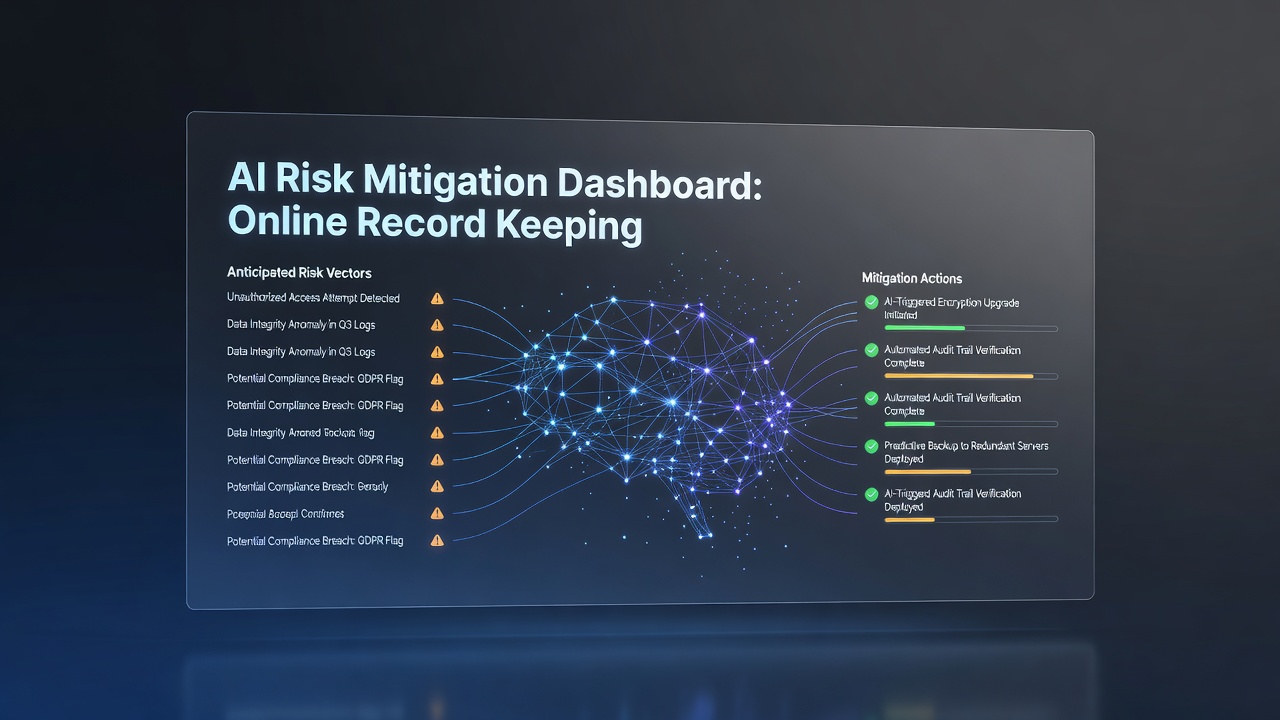
Data from a collaborative project between Canadian and European research centers shows that combining graph neural networks with time-series forecasting enabled teams to anticipate storage contention issues up to six weeks before peak migration activity. These forecasts incorporate variables such as seasonal usage spikes and scheduled maintenance windows, which helps administrators schedule transitions during lower-risk periods. The same studies note that integration with existing compliance frameworks, including those governing data residency, remains straightforward because the AI outputs feed directly into audit trails without requiring separate reporting pipelines.
Regulatory and Standards Developments Through 2026
As of September 2026, several international working groups continue to refine guidelines for AI-assisted record management, emphasizing transparency in model decision-making and requirements for human oversight during automated interventions. Organizations reference frameworks developed by bodies such as the National Institute of Standards and Technology alongside emerging directives from the European Union to ensure their AI components meet auditability standards. NIST AI Risk Management Framework provides structured approaches that map directly onto record keeping workflows, while parallel guidance from Australian digital preservation initiatives highlights sector-specific considerations for cultural heritage materials.
These evolving standards encourage the use of explainable AI techniques so that migration teams understand why a particular risk score was assigned to a dataset or process. Continuous validation against ground-truth outcomes remains a core recommendation, because model drift can occur when underlying infrastructure changes faster than training data refreshes.
Conclusion
Artificial intelligence applications in online record keeping during technological transitions continue to expand as organizations accumulate more transition data and refine predictive models. Integration of these tools with established compliance and preservation protocols supports proactive risk management across public and private sectors. Ongoing research and standards work through 2026 and beyond will likely shape how institutions balance automation with required human accountability in safeguarding digital records.